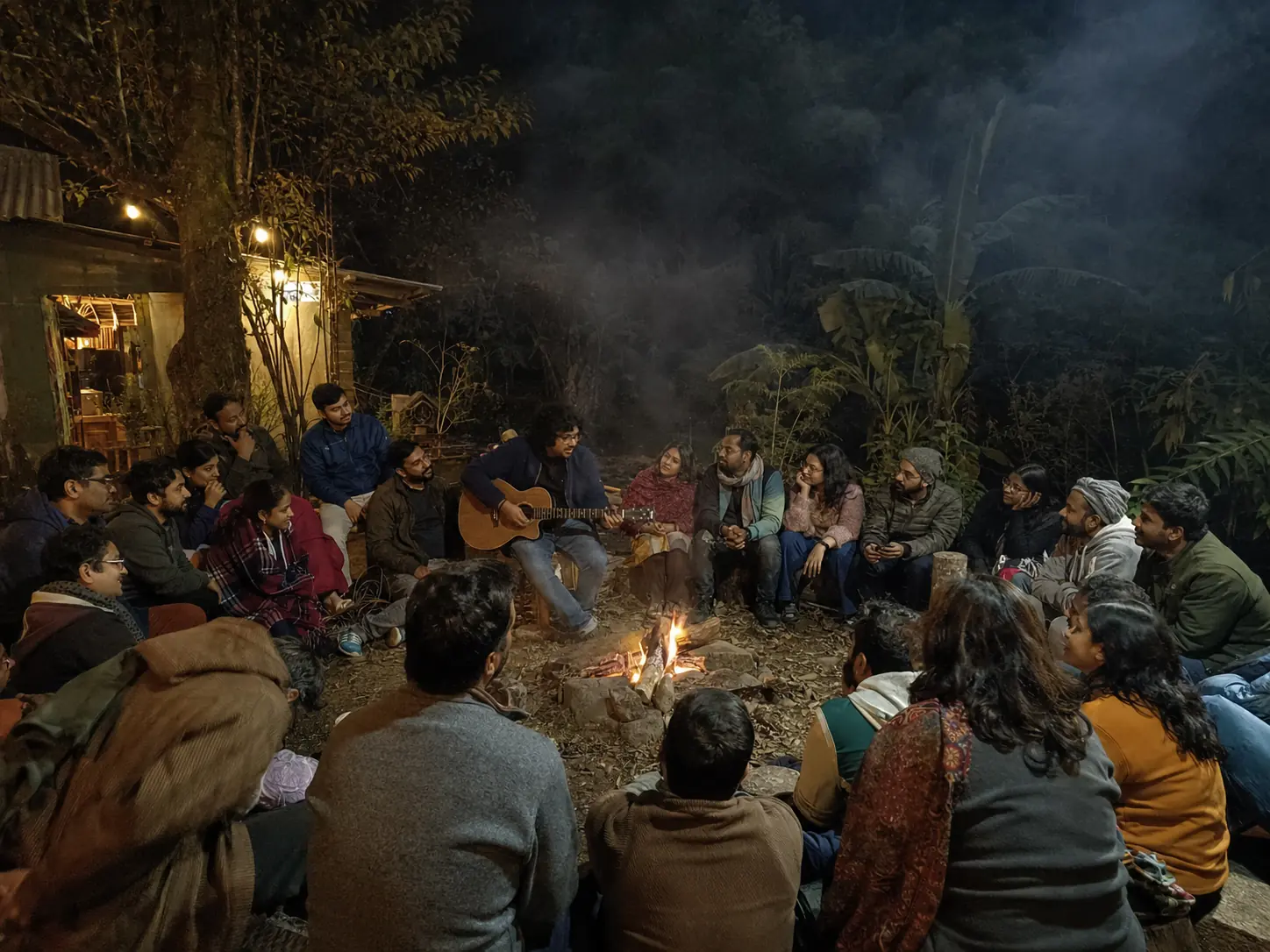
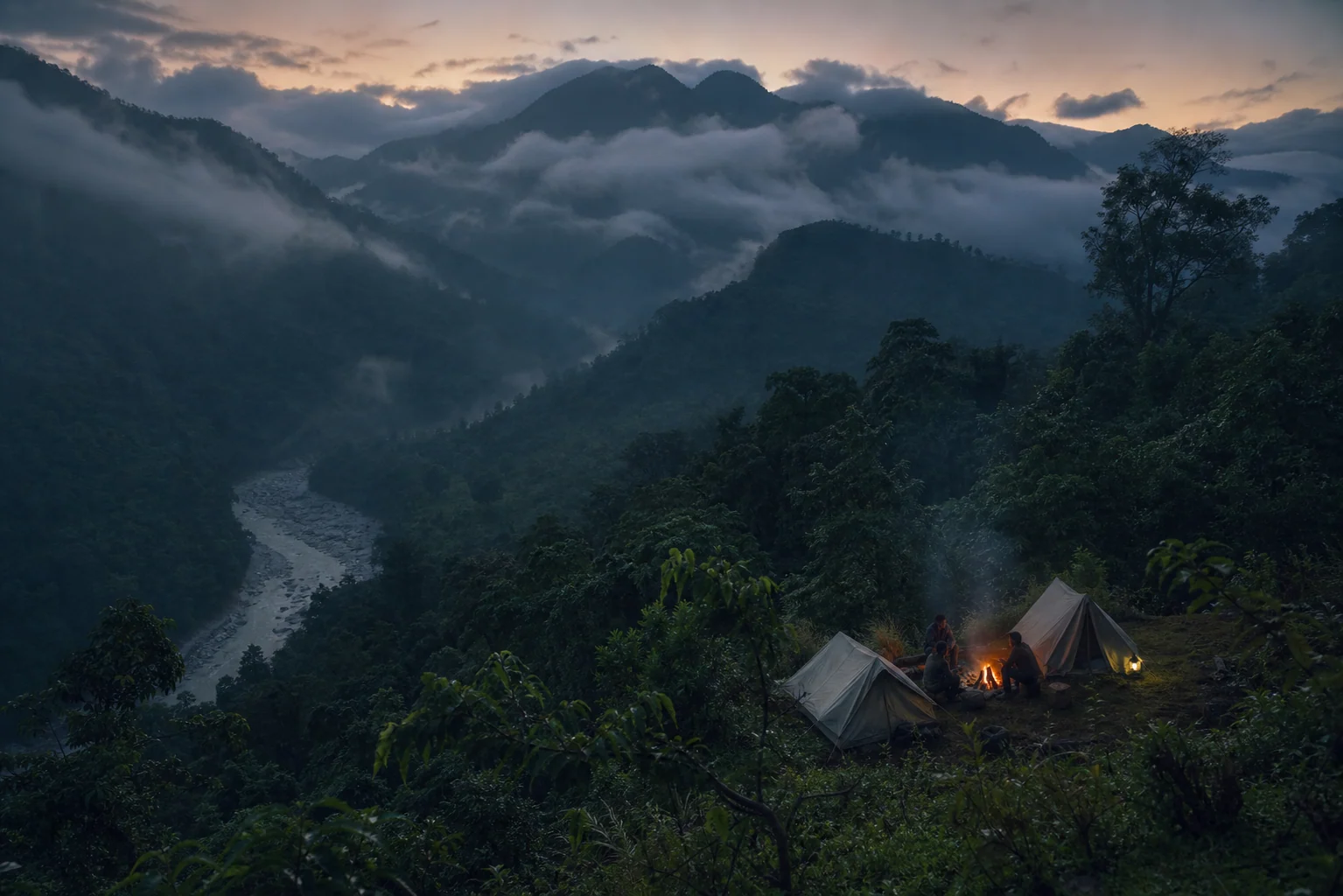
Tea before sunrise. Boots left to dry. A river louder than conversation. These are often the parts people carry home.
What memory selects
The mind rarely keeps the schedule intact
Months after a journey, the sequence blurs. What remains may be the temperature of a metal cup at dawn, laughter while trying to fold wet canvas, or the sound of somebody singing without a microphone. These moments appear minor only when measured against an itinerary.
In lived experience, they are thresholds. Repetition turns a strange place into a temporary home and a group of strangers into familiar presences.
Morning tea is an orientation ritual
Before phones and instructions, a warm drink lets people meet the weather. Where is the cloud? How cold was the night? Is the river louder? What does the day feel like before the plan tells us what it should be?
Even ten unprogrammed minutes can move a group from consumption into attention. The host does not need to perform the morning; only make enough space for it.
An itinerary records where you went. Ritual records how being there entered the body.
Care for equipment becomes care for one another
Hanging a jacket, drying boots, checking a torch or packing shared food looks merely practical. Done together, these acts reveal how community is made: somebody notices what will be needed later and acts before being asked.
This is especially valuable in student and first-time camping groups. Competence becomes visible, transferable and shared rather than remaining with the designated expert.
Do not document every ritual out of existence
Photographs help memory, but constant capture can replace participation. Let one person make a few thoughtful images, then return attention to the fire, food or face. Some moments should remain evidence only to the people who were there.
The premium journey is not the one with the fullest content folder. It is the one whose smallest moment still has texture when you close your eyes.
Protect repeated, unhurried moments—morning tea, equipment care, one shared meal, ten silent minutes—because they give a short journey emotional duration.