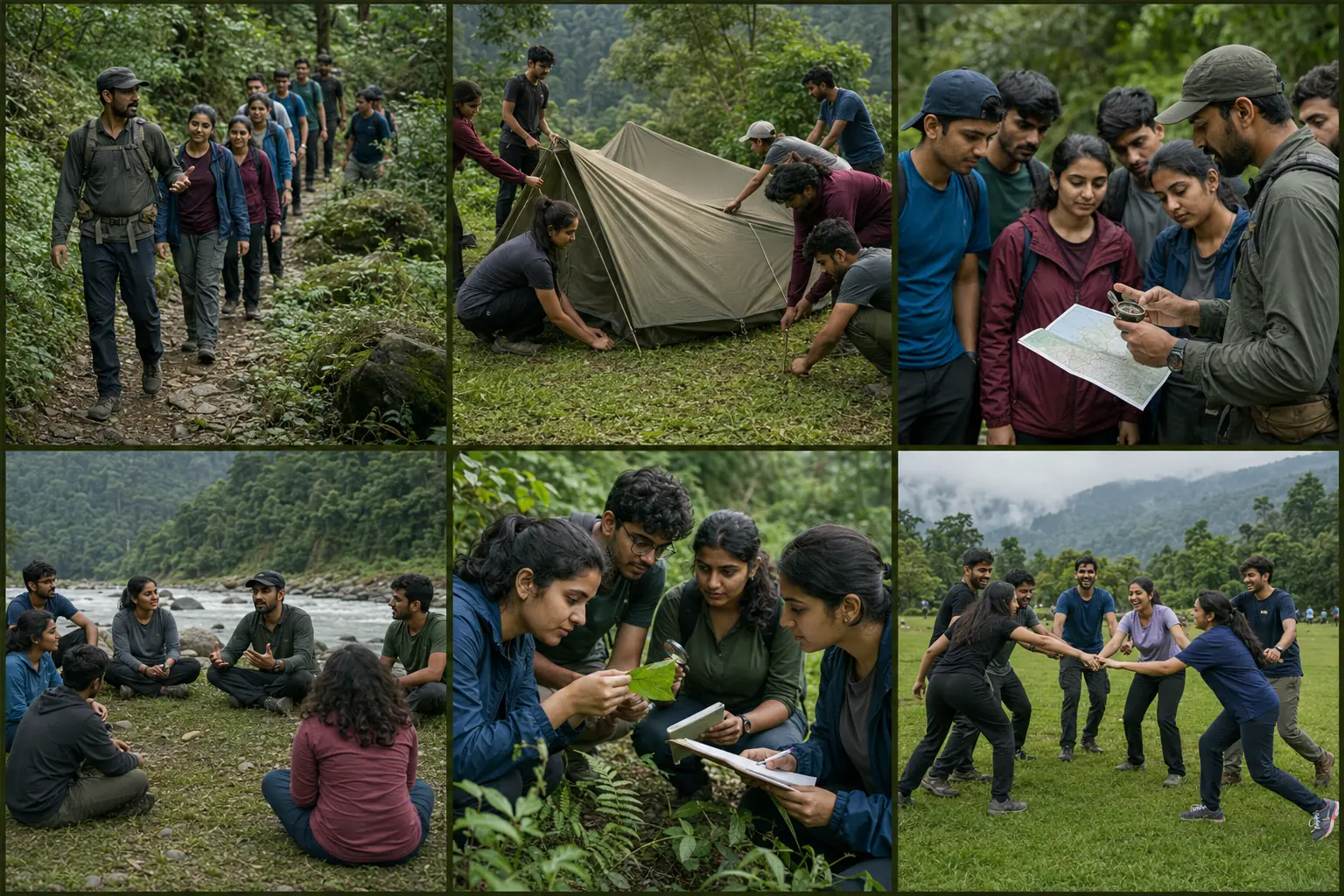
A student camp is not a holiday with uniforms removed. Done well, it is a living laboratory for judgement, cooperation, confidence and care.
Beyond activity lists
Experience becomes education through design
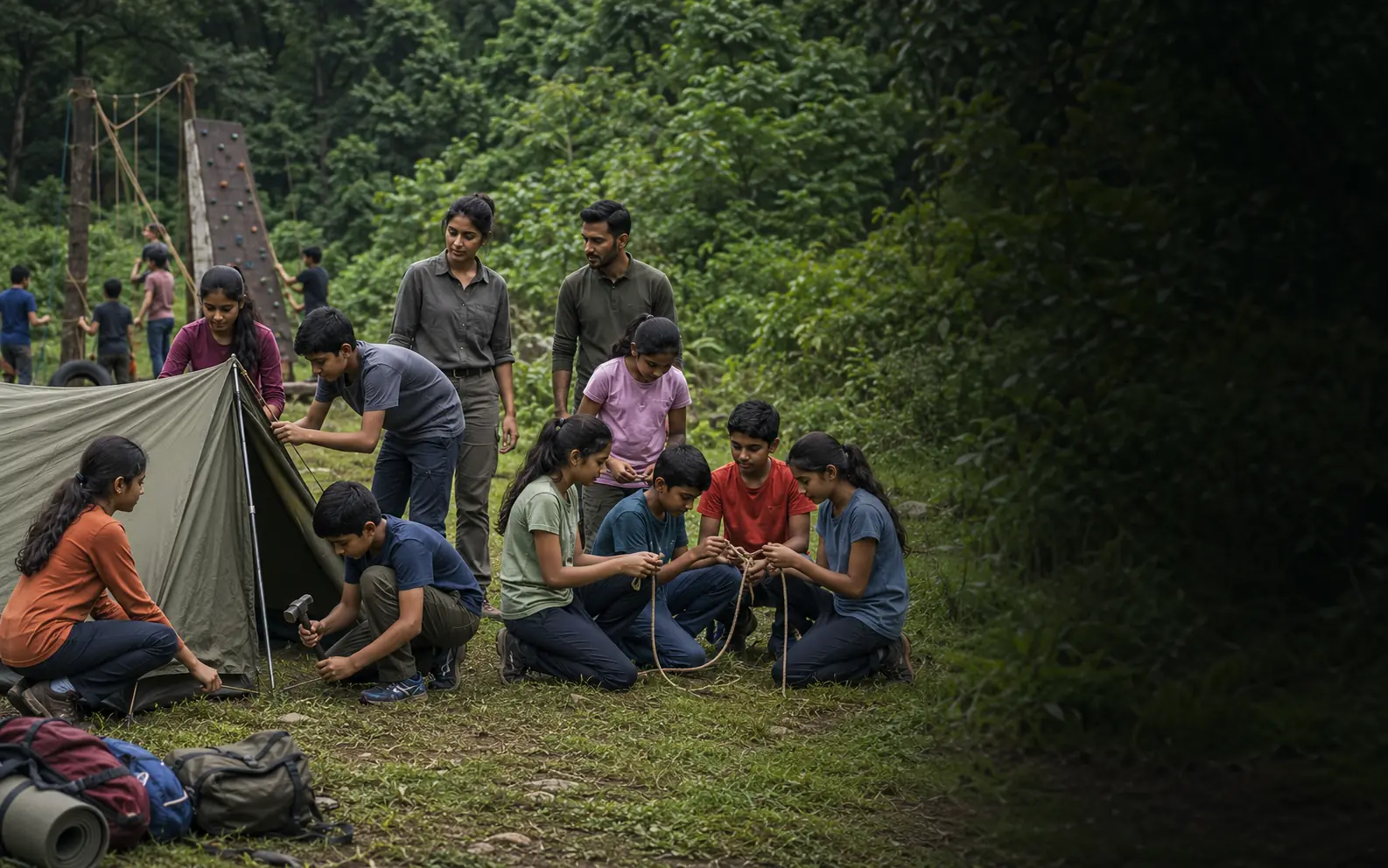
A rope course, hike or tent-pitching session does not automatically create learning. The task needs an intention: communication, risk judgement, ecological observation, self-management or collective problem-solving. Students need a briefing that makes the challenge understandable and a debrief that helps them name what changed.
Without reflection, the most athletic child may simply perform what they already know. With careful facilitation, different kinds of intelligence become visible.
Give responsibility that is real and bounded
Students can manage personal kit, rotate simple camp duties, monitor water, read a route or help a team keep time. The responsibility must have a real consequence, but remain within a safety system adults control.
This combination builds agency. A child learns that care is not abstract: somebody drinks because the bottles were filled; the group leaves on time because equipment was checked.
Confidence is rarely delivered as a lecture. It appears when a child completes one real task, then realises the group needed them.
Inclusion is part of adventure design
Not every student relates to height, speed, darkness, food or group exposure in the same way. Medical information, neurodiversity, disability, religious practice and prior experience should be understood before the programme is fixed.
Challenge can be scaled without becoming meaningless. Choice of role, alternative routes and gradual participation allow courage to be measured against each student's starting point—not against the loudest peer.
Safeguarding should be operational, not decorative
Schools and parents should know supervision ratios, staff roles, emergency access, communication arrangements, accommodation boundaries, medication handling and weather contingencies. Consent and photography policies must be clear.
The premium quality of a student camp is revealed in calm systems: headcounts that do not feel chaotic, instructors who explain before commanding, and children who know exactly which adult to approach.
Bring the learning home
A final reflection can connect outdoor moments to school and family life: how the team made a decision, what someone did when afraid, which assumption about a classmate changed. Teachers can carry those observations back into the classroom.
The camp succeeds when a child returns not only with photographs, but with evidence that they can notice, decide, contribute and care.
Judge a school camp by its learning design, safeguarding, reflection and inclusion—not by the number of high-adrenaline activities listed.